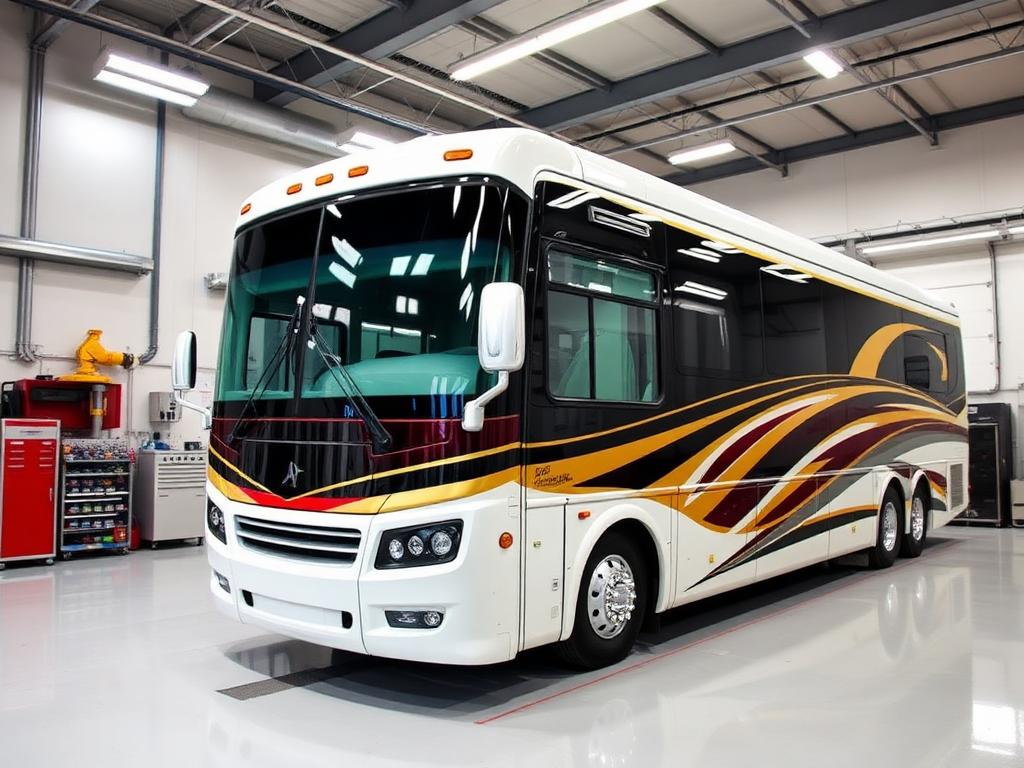
An RV roof coating is one of the smartest investments you can make for your motorhome. For a fraction of the cost of roof replacement, a quality coating creates a seamless waterproof barrier that reflects UV rays, prevents oxidation, and extends your roof's life by a decade or more.
Rubber vs. Fiberglass Roof Coatings
Rubber (Elastomeric) Coating
For EPDM & TPO roofs
- Flexes with the membrane through temperature changes
- Self-healing: minor punctures seal themselves
- Bright white finish reflects maximum UV
- Typically the lower-cost coating option
- Lifespan: 10-15 years
Fiberglass (Gel-Coat) Coating
For fiberglass roofs
- Hard, durable finish resists impact and abrasion
- Restores faded gel-coat to like-new appearance
- Excellent UV protection for desert climates
- A larger job than elastomeric coating
- Lifespan: 12-20 years
Cost Comparison: Coating vs. Replacement
| Option | Relative Cost | Lifespan |
|---|---|---|
| Roof Coating | A fraction of the cost of replacement | 10-15 years |
| Full Roof Replacement | The most expensive option, reserved for failed membranes | 15-20 years |
Coating a roof that still has a sound membrane buys years of protection for far less than tearing the roof off and starting over. Exactly where your job lands depends on roof size, material, and how much prep work the surface needs, which is why we price from an inspection rather than a chart. We provide free estimates with an itemized breakdown before any work begins.
The Professional Coating Process
When a Coating Isn't the Answer Yet
A coating is preventive maintenance for a roof that's still sound, not a fix for one that already has problems. If the roof has soft spots, delamination, or rot underneath, that damage has to be repaired first; coating over it just seals the problem in rather than solving it. Using the wrong coating type for your roof material carries its own risk: rubber and fiberglass roofs move differently with temperature, and a mismatched coating can crack or fail to adhere. That's why every coating job starts with an inspection to confirm the roof is a good candidate before any product goes on.
Heat Reduction Benefits
In Las Vegas, your RV's roof surface can exceed 170°F on a summer afternoon. A UV-reflective white coating reduces that surface temperature by up to 50°F, which translates to:
- AC runs less frequently, reducing energy costs and generator wear
- Less thermal stress on roof membrane, extending its life
- Reduced UV damage to interior furnishings through skylights
Ready to Protect Your RV Roof?
Get a free inspection and coating estimate. We'll recommend the right product for your roof type.
Related Service
Rubber or Fiberglass Coating Service